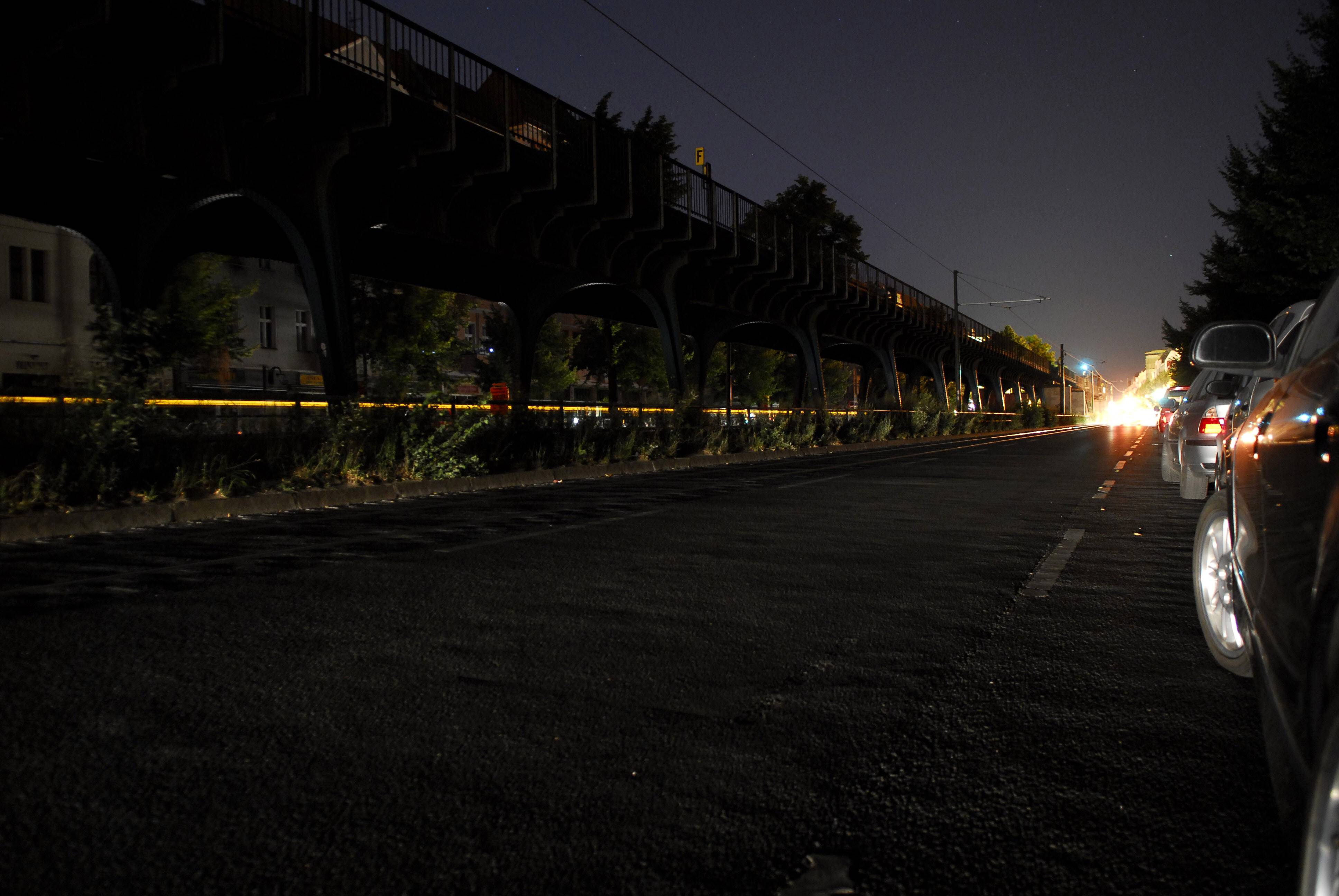
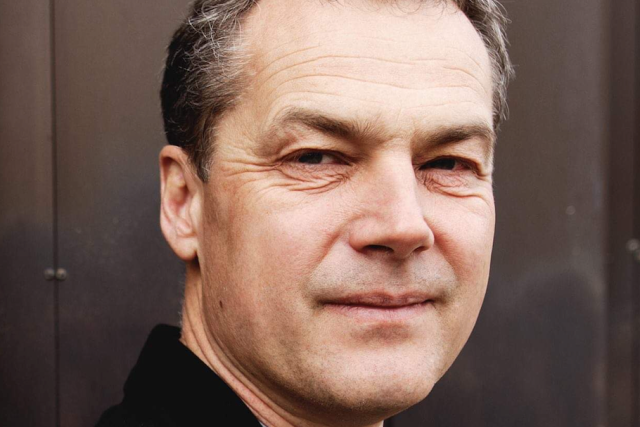
As 2026 began with darkness, cold and standstill for thousands of Berliners, Detlef Kurth monitored the situation closely. The widespread blackout in the south-west of the capital was a scenario that the professor of urban planning had repeatedly modelled in his research.
As an expert in urban resilience, he focuses on how cities can cope with such exceptional situations. “According to UN-Habitat's definition, resilience means more than just resistance,” Kurth explains.
“It is about the interplay of three dimensions: resistance, adaptation, and transformation. Cities should prepare to continue functioning in times of crisis and to adapt after damaging events in such a way that they are better equipped for the future, both in terms of sustainability and resilience. The internationally accepted guiding principle for this is ‘building back better’.”
He believes that the state of emergency caused by an attack on power lines demonstrates our vulnerability, but also indicates where we can increase resilience. ‘Securing critical infrastructure is a major issue. The importance of shelters has also become apparent; we're not just talking about bunkers here, but also recreation rooms such as heated gyms with electricity and food supplies. Quickly available generators are needed, but these were not available everywhere in Berlin,” says Kurth.
Other countries are further ahead
Urban resilience is a relatively new concept in Germany. In 2021, it was applied systematically to cities for the first time in response to the Coronavirus pandemic, when the Federal Ministry of the Interior, Building and Community published specific action recommendations for cities and municipalities. This so-called Urban Resilience Memorandum was drafted by a group of experts chaired by Kurth.
'Countries such as Japan and Taiwan have been planning for earthquakes, tsunamis and pandemics for decades,' says the professor. 'In Germany, we have often been lucky. However, this is changing due to climate change, heat, heavy rain, flooding, pandemics, and the vulnerability of digital systems. What is increasingly coming into play, and was missing from the memorandum, are hybrid attacks and Russia's imperial war of aggression against Ukraine in the heart of Europe”.
For him, reports that Ukrainians living in Berlin quickly organised a 'resilience hub' for residents with heat and electricity, while many district residents were still at a loss, fit into the picture: ‘People in countries with hard-won experience have already learned what to do in exceptional circumstances. We are now realising that this is also becoming more important in Germany.”
The principles of resilient cities
Certain principles help researchers to view cities from the perspective of resilience, including redundancy, diversity, efficiency, robustness and exposure.
'Infrastructures should be repetitive and decentralised,' says the expert, explaining what redundancy means.
The power outage in Berlin showed what happens when there is no backup plan: 'The second power cable was located next to the first and was also destroyed.' Multiple backups are therefore necessary everywhere. In retail, for example, this could mean having several smaller storage locations instead of a single central distribution centre. In the water supply, it could mean having pumps, pipes, and controls that are not dependent on a single hub.
The city should be compact
The principle of diversity is closely linked to this: there should not be a single power plant whose failure would paralyse the entire city. 'This is where renewable energies, combined with local storage facilities, can contribute to resilience and security of supply,' says Kurth.
Buildings and infrastructure must be robust, as well as efficient, meaning compact, quickly accessible and usable structures. Kurth cites the city of short distances as an important concept: neighbourhoods where housing, shopping, education, healthcare and green spaces are so close together that people can get by without a car.
This urban planning concept, also known as the '15-minute city', involves a functional mix of shops and services on the ground floors of residential and office buildings, local daycare centres and schools, care services concentrated in the immediate vicinity, and green spaces close to homes.
According to Kurth, such neighbourhoods not only contribute to climate protection, but also increase urban resilience and the ability to adapt to climate change. 'People are less dependent on cars, public transport, and long supply chains. Short distances and stable social networks in the immediate vicinity help cities to function even in times of crisis”.
Careful consideration is necessary
Finally, exposure plays a role, i.e. the question of location. 'For example, you shouldn't build in flood zones or heat hotspots.'
Kurth emphasises that these principles can conflict with each other. For instance, concepts for compact and efficient neighbourhood design conflict with the desire for fresh air corridors and water retention basins to protect against heat and flooding. 'Resilience therefore always involves weighing up the options within the context of overall urban development, which is ultimately the main task of urban planning in a democratic and pluralistic society.'
On-site research
Urban and spatial planning has a decades-long tradition as an independent degree programme in Kaiserslautern and was one of the first and largest programmes of its kind in Germany. ‘Our research has always been very application-oriented. This also applies to the field of urban resilience. We talk to those responsible in local government and authorities, sit on planning committees, and develop risk analyses and concrete proposals.’ In workshops and real-world laboratories, researchers discuss with citizens and residents how structures can be improved.
Kurth emphasises that resilience research considers the entire city. ‘We work across disciplines and collaborate with fields such as civil engineering, transport planning, the social sciences, statistics, law and many more.’
Lessons learned from the Ahr Valley flood
For example, doctoral students in his department are providing scientific support for reconstruction efforts following the flood in the Ahr Valley. They analyse past mistakes and support the reconstruction with technical concepts.
'A positive example is Bad Neuenahr-Ahrweiler, where a dedicated development company is coordinating the reconstruction,' Kurth explains. However, each municipality is largely working on its own. 'Except for flood protection, there is no overall regional strategy. In our view, this is a big mistake.'
There is also room for improvement in the Ahr Valley with regard to building back better. ‘This is partly due to insurance companies, funding policies, or the fact that people want to rebuild on their previous properties.’
Regulation is a strength
The professor views German planning law as a strength. 'Municipalities have effective instruments at their disposal, such as the Building Code. We are highly regulated, and in our view, this is a strength when it comes to effective disaster prevention.'
The flood in the Ahr Valley showed the dire consequences that poor location decisions can have, such as the loss of life of disabled people in institutions in flood areas. According to the expert, coercive measures are also legitimate if necessary to avoid such risks when moderation does not work.
"In extreme cases, authorities can force an owner to change how they use the ground floor in a flood zone, or even expropriate it. In practice, however, this has hardly ever been used in Rhineland-Palatinate.”
Resilience under war conditions
Urban planners' expertise is also in demand internationally. Through the German Academic Exchange Service (DAAD), Kurth's department offers Ukrainian students digital teaching formats, workshops and scholarships. ‘This also involves urban resilience under war conditions,’ reports Kurth. ‘How do I protect myself? How do I deal with evacuations? How do I rebuild infrastructure? "Together, we are developing joint teaching modules and master's programmes on these topics."
In collaboration with the German Society for International Cooperation (GIZ), concrete concepts are also being developed for the reconstruction of cities completely destroyed by Russia's war of aggression. ‘The planning concepts for Ukraine are difficult to implement because the war is dragging on. Currently, securing energy supplies and protecting people from the terror of bombing is more important than thinking about building back better.'
The international exchange works in both directions. 'We are learning a lot from Ukraine, for example about shelters and improvised resilience points, which have long been part of everyday life there.'
Kaiserslautern as a model city
In a joint project with Karina M. Pallagst, head of the International Planning Systems department at RPTU, the researchers are focusing on their own city, investigating its potential as a resilient transformation city. “The aim is to bring together industrial history, building culture and the future,” explains Kurth. 'We are looking at how we can use existing foundations to make the city more sustainable and crisis-proof.'
The crux of the matter is risk awareness
Technical defects, human error or targeted attacks can quickly paralyse entire cities. A power outage like the one in Berlin or a hybrid attack could happen almost anywhere. We lack sufficient awareness of such risks. Unfortunately, we are still very vulnerable,’ says Kurth. However, he emphasises: 'We don't want to stir up fear, but rather increase risk awareness so that people are prepared.'
From an urban planning perspective, it is crucial to systematically consider potential risks at the outset of every project. Is the planned construction area located in a flood zone? Where does heat accumulate? What would happen if the power or internet supply failed, and what should be done in that case? Ideally, there should be a resilience manager to coordinate precautions, responsibilities and procedures. After all, urban resilience means consciously planning ahead for risks above all else. This is a particular strength of our urban and spatial planning graduates.”